


This week is about control: who can edit your Business Profile, what Google may pull from your site, how AI ads are visible, and why automation still needs human proof.
In This Issue:
Why local SEO is becoming a proof system
The new four-day clock on some GBP suggested edits
Why ChatGPT ads need their own job description
How to test AI Max without trusting platform wins alone
Why AI is better as a thinking partner than a copy machine
The Deep Dive
Local SEO is becoming a proof system

Source: How to turn Claude into an information gain researcher
This week’s strongest local SEO story is bigger than one feature. The pattern underneath several small updates is the real signal.
Whitespark notes that Google Posts now show view counts again, including combined views from Search and Maps for posts published within the last 18 months. It also points to a Google Site Kit update that brings form completion data into WordPress, plus a Claude workflow for finding original facts, statistics, and primary-source material.
Put those together and the message is simple: local marketing is getting less tolerant of vague activity. Posts need UTMs. Website forms need conversion visibility. Service pages need specific proof, not generic AI filler. Even the content research process needs better inputs than rewriting what every competitor already says.
For local businesses, that is a useful reset. You do not need to publish more for the sake of publishing. You need clearer proof of what people saw, clicked, submitted, called about, and believed.
The Real Reason This Matters: AI search, GBP visibility, and ad automation all reward source material that is specific, consistent, and measurable.
Key Takeaway: The local businesses that win will have cleaner evidence: tracked posts, tracked forms, specific page copy, and proof that matches what staff and ads are saying.
Action Step: Pick one priority service page. Add one original proof point, one stronger FAQ, one customer-language phrase from calls, and one tracked CTA. Then make sure GBP Posts and WordPress forms can be measured before you publish more.
Suggested GBP edits now have a four-day clock
Source: Google Business Profiles Gives You Four Days To Reject User Edits
Google Business Profile accuracy now has a shorter response window.
Search Engine Roundtable reported that Google updated its documentation to say owners may receive an email or in-product notification when a suggested edit requires review. Once notified, the owner has four days to accept or reject it. If they do not respond, Google may automatically publish the change when it is supported by public information like the business website.
The uncomfortable part is that not every edit waits for review. Google also says some suggested edits can be applied without prior notice if they meet policy guidelines.
For local operators, this turns profile management into an operations habit. Hours, services, categories, phone numbers, and location details can quietly affect calls and bookings. A stale inbox is now a local SEO risk.
The Real Reason This Matters: Your Business Profile is no longer a set-it-and-check-monthly asset. Google is giving owners a narrow window to stop some bad or outdated edits.
Key Takeaway: GBP alerts need an owner, a backup owner, and a weekly review rhythm.
Action Step: Confirm every location has active GBP email notifications, a current primary owner, and a documented review process for suggested edits. Check the profile dashboard at least twice a week.
ChatGPT ads are becoming more visible

Source: ChatGPT Ads Appeared In 47% Of Video Gaming Chats, Data Shows
ChatGPT ad inventory is early. It is also increasingly visible.
Search Engine Journal covered Comscore data showing sponsored ads in 47% of video-gaming conversations, 24% of toys and hobbies discussions, and 22% of books, music, and video conversations in June. The report leaves out conversation counts, so treat the numbers as directional rather than settled benchmarks.
The pattern still matters. OpenAI’s self-serve Ads Manager, Shopify merchant app, and Sponsored Agents experiments all point in the same direction: conversational ads are becoming a real testing surface.
For local businesses, the immediate move is not to chase gaming-category data. It is to decide what role conversational ads would play if they reach your niche: awareness, comparison, appointment intent, or retargeting.
The Real Reason This Matters: Ad surfaces inside AI assistants will not behave exactly like search ads, and early reporting can make them look more mature than they are.
Key Takeaway: Treat ChatGPT ads as a test with its own job, not a direct replacement for Google Search budget.
Action Step: Write one testing hypothesis before spending: who should see the ad, what question they are asking, what action counts as success, and what budget source is funding the test.
AI Max needs an experiment, not a leap of faith
Source: Test Google Ads AI Max Against Dynamic Search Ads
Google is giving advertisers a cleaner way to compare AI Max against Dynamic Search Ads.
Search Engine Roundtable reported that Google added documentation for testing AI Max with experiments. Advertisers can use custom experiments or an experiment template, then apply a winning result to the original campaign or convert the treatment into a new campaign.
That is good news for local advertisers who have been pushed into automation without enough proof. But it also creates a responsibility: do not call a test successful just because Google labels it a winner. Lead quality, service area fit, call recordings, and booked jobs still need to be part of the readout.
The Real Reason This Matters: Automation can improve reach while quietly changing the type of query, lead, and intent you are buying.
Key Takeaway: AI Max should be tested against business outcomes instead of platform conversions alone.
Action Step: If you test AI Max, set the experiment success criteria before launch. Include qualified call rate, booked appointment rate, wasted-location leads, and search term quality where available.
AI can make better ideas, if you steer it
Source: How to use AI to be more creative
AI is useful for local marketing, but it loses the plot when every business starts sounding like the same thin brochure.
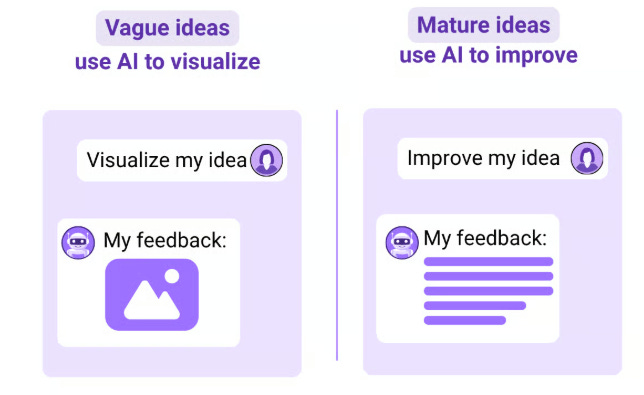
Science Says summarized research showing that AI can make ideas more creative when people use it the right way. The practical lesson is that AI works best as a collaborator: ask for alternatives, constraints, angles, objections, and examples rather than letting it produce the final answer in one pass.
That is directly useful for local businesses. The best offers, service pages, ads, and review prompts usually come from a mix of customer language, staff experience, and structured ideation.
Use AI to widen the option set. Then let the real business narrow it back down.
The Real Reason This Matters: Generic AI output is becoming easy to spot, but AI-assisted thinking can still help local teams find clearer hooks and better offers.
Key Takeaway: The advantage is not publishing AI copy. The advantage is using AI to pressure-test ideas before a human edits them.
Action Step: For one campaign, ask AI for ten positioning angles, five objections, and five proof points. Keep only the ideas your team can support with real examples, reviews, photos, or call data.
🌶️ Spicy Take: Google is your copywriter now
A fresh Reddit thread from r/GoogleLSAAds is the kind of thing local advertisers should not ignore.
The poster showed examples where Google appeared to turn public website content into Local Services Ads callouts, including prices, awards, case results, and trust claims. This is Reddit-sourced field observation, not a final official ruling, but it lines up with Google’s documented move toward asset optimization in pay-per-lead Performance Max.
My take: your website is already ad copy, even when you did not write it for ads. Old prices, unsupported guarantees, vague awards, and sloppy page titles can leak into places you did not expect.
Source: Reddit r/GoogleLSAAds
Quick Wins
Watch spam-review pauses. Google is sending Business Profile emails when it detects a spike in spam reviews and may temporarily pause new reviews while it mitigates the risk. (Search Engine Roundtable)
Audit LSA callout source copy. A fresh Reddit thread showed examples of LSA callouts matching public website text. Treat this as a prompt to clean up old prices, awards, and guarantees. (Reddit)
Use GBP Post views carefully. Whitespark notes that Google Posts now show combined Search and Maps views for posts from the last 18 months. Add UTMs so views do not become vanity metrics. (Whitespark)
Keep humans in AI creative. Science Says points to research that AI can improve creativity when guided. Use it for angles and objections, then edit with real customer language. (Science Says)
Name your AI ad test. SEJ’s ChatGPT ads coverage is a reminder to label the job before budget moves: awareness, comparison, lead capture, or retargeting. (Search Engine Journal)
Do not trust AI Max on platform wins alone. Google Ads experiments can compare AI Max to DSA, but local advertisers should judge qualified calls and booked appointments too. (Search Engine Roundtable)
No fresh BrightLocal research this week. BrightLocal’s newest relevant research visible in discovery was the September 16 local AI study, already covered last issue and outside this window. (BrightLocal)
Let me help you “Get More Leads”
Whenever you’re ready, book a 15-minute Help Me Get More Leads call below. I will help you spot the biggest leak and the next practical fix.